
Directory · 2026-Q3 · Data as of 2026-06-30
Global Fermentation CDMO & Pilot Infrastructure Directory
Bringing a precision-fermentation or alternative-protein ingredient, an agricultural biological, an enzyme, a probiotic, or a specialty or fine-chemical building block to scale — and need a partner who can actually make it, whether a toller, a full-service CDMO, or a pilot to get there? This directory is the map. It lays out 41 tollers you can actually hire — 5 purpose-built precision-fermentation plants, 18 established CDMOs and 18 regional & specialist tollers — plus a 20-facility global pilot & scale-up shortlist that bridges lab to line. Every counterparty is indexed on the terms that decide a sourcing call: archetype, geography, certification tier, the molecules they run, whether they take third-party work, and what they cost. Only the 9 captive incumbents sit outside your reach, charted as context.
Coverage spans one shared supply base. Food precision fermentation, feed and animal nutrition, agricultural biologics, and industrial proteins and enzymes — read as one toll base serving several demand verticals (pharma/biologics contract manufacturing is a separate landscape, not the focus). Every available toller is a decision-ready row — capacity, certification, toll status, any named client, any distress signal that flags cheap capacity now — plus 17 deep-dive profiles of the most significant, and an ag-microbial spore-toller sub-directory.
Global by construction. Every region was researched in its own language — Europe, North America, China, India, Southeast Asia, Latin America, Russia/CIS, Turkey, the Middle East, Africa and Australasia. That native-language canvass is the edge: it puts capacity that never advertises in English on the map — a Turkish enzyme CMO, an Argentine à-façon toller, an Australian purpose-built plant — and records where a region is genuinely empty rather than leaving a blank.
Reading the map. Food-grade capacity is more available than the industry assumes — but food-grade with a proven recombinant-protein process is genuinely scarce, and that gap, not raw capacity, is the real constraint. Certification tier, not the headline fermenter volume, sets your cost floor and decides which counterparties you are even eligible to use. And it is the strain's titre, far more than the plant's geography, that determines whether the economics ever close.
Beyond the register, the directory hands you the decision tools — an eight-dimension counterparty-evaluation framework, fermenter-to-€/kg economics rules of thumb so you can model your own numbers across molecules and geographies, and a named forward call on who wins. The names behind every row, the resolved capacities and cost figures, and the forward call sit in the purchased directory; decisive figures are blanked in the sample.
Academic, an early-stage startup, or an independent researcher with a genuine need but not a corporate budget? Talk to us and we’ll sort out access.
A single-user licence is for the one named person who buys it. A team licence is for the buying organisation — for internal use across your team or company. Every copy is watermarked to the licensee: the named individual, respectively the organisation. See the licence terms.
Table of contents
- 0 Executive summary and the forward call
- 1 Scope and definitions
- 2 The five archetypes, certification matrix and demand verticals
- 3 Pilot and scale-up facilities: which ones can actually scale you
- 4 Regional cost-structure analysis
- 5 Named counterparty profiles — 17 deep dives, plus industrial-protein and ag-microbial toller sub-directories
- 6 Counterparty-selection framework — eight evaluation dimensions
- 7 Cost and economics — the toll-manufacturer P&L
- 8 Forward call — who wins
Total 53 pages including appendices.
What you'll learn
- The five archetypes of fermentation capacity — and why, across the 59-counterparty register, only 41 are tollers you can actually hire, with 9 captive incumbents charted as context (not capacity you can book) and the balance pilot & scale-up facilities
- Why food-grade capacity is more available than the industry assumes — and why food-grade with a proven recombinant-protein process at commercial scale is the real scarcity
- How certification tier, not headline fermenter volume, sets your cost floor and decides which counterparties you are even eligible to use
- The fermenter-to-€/kg economics, worked three ways — why a strain's titre, far more than the plant's geography, decides whether the numbers close
- An eight-dimension counterparty-selection framework, with the failure-mode case evidence behind each dimension
- The China cost arbitrage — structurally real on every input line, but narrowed by the absence of EU/US food-grade recombinant-protein certification
- The forward call: which archetypes are overbuilt, which under-supplied, and where consolidation lands in the next 12–36 months
About the author
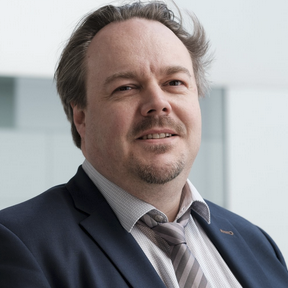
Wesley Carpentier, PhD, served as Chief Commercial Officer at Inbiose (2016–2020) and returned to lead the company in 2024 — one of the named players in this directory. Prior roles include Director of Global New Market Development at DuPont Industrial Biosciences (the Danisco / Genencor fermentation business across the US, NL, and CN), and CCO/COO at S-Biomedic through its acquisition by Beiersdorf. He writes SUDEVCO research from the operator side of every conversation.
Also consider
Need this applied to your situation?
Strategic advisory in HMOs and adjacent specialty ingredients — sector diligence for PE investors, market-entry strategy for corporates, regulatory-path mapping, partner identification. Bespoke, confidential.
See advisory →